
Understanding Real ID Requirements for Travelers
Ever arrived at the airport and felt that last minute panic about your ID 😬 Real ID was created to make travel safer but missing it can stop your journey fast. Learn why it exists, how to spot it, who needs it, and what alternatives like passports still work. A little prep now means smoother travel later ✈️🛂 #RealID #TravelTips #AirportSecurity #TravelSmart
TRAVEL TIPS
Larry Chandler
1/7/202613 min read
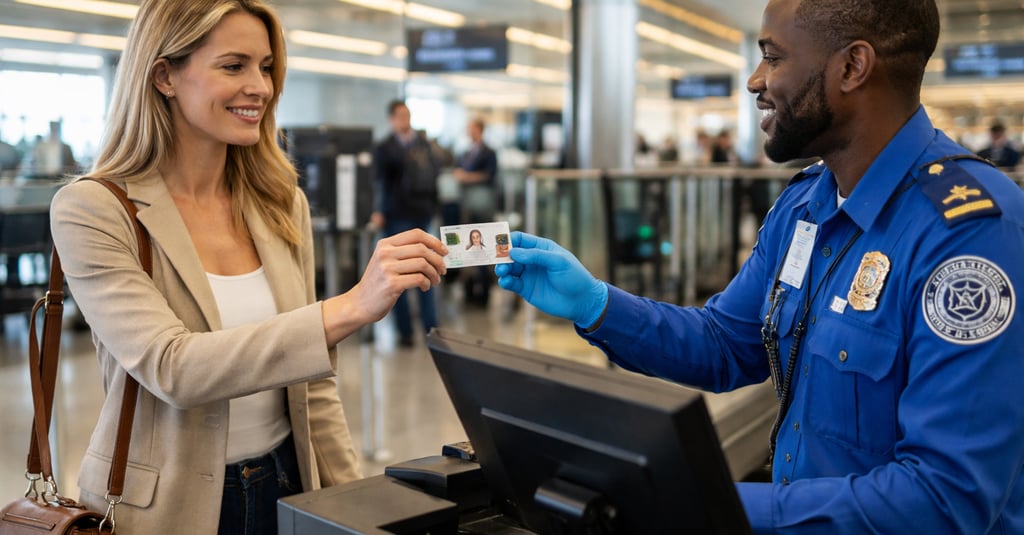
What is a Real ID and Why Does It Exist
The Real ID Act, enacted by Congress in 2005 in response to the September 11 attacks, aims to establish a more secure method of identification for air travel and government access. This legislation was introduced to address the concerns about the quality of identification documents and to create a consistent identification framework across various states.
The primary goal of the Real ID is to enhance national security by ensuring that only individuals who have undergone rigorous checks are able to board domestic flights or access certain federal facilities. Prior to the implementation of Real ID, states had different standards for issuing identification. This variation made it easier for individuals to obtain fraudulent identification. The Real ID seeks to mitigate these risks by standardizing requirements for issuing identification documents across all states.
To comply with Real ID regulations, states are required to verify an individual’s identity through various means, including checking documents such as birth certificates, passports, and social security cards. Additionally, states must also conduct background checks for applicants. These standards help ensure that the identification issued is reliable and secure.
The Real ID also allows for a more streamlined identification process at airports, subsequently reducing delays and enhancing the overall travel experience. Once individuals are in possession of a Real ID-compliant identification card, the likelihood of issues related to identity verification during air travel decreases significantly.
In conclusion, the implementation of the Real ID Act promotes enhanced security across the nation by establishing trustworthy identification standards for air travel and federal access. As travelers prepare for their journeys, understanding the implications of Real ID can help facilitate smoother and safer travel experiences.
Real ID Enforcement Dates
The implementation of Real ID requirements introduced significant changes to the identification needed for travelers when boarding domestic flights or accessing federal facilities. Understanding the enforcement timeline is crucial to ensure compliance and avoid potential travel disruptions. Initially, the deadline for full enforcement of Real ID was set for October 1, 2020. However, due to the COVID-19 pandemic and its wide-reaching impacts, this deadline has been extended.
The new enforcement date has now been established as May 7, 2025. This extension grants travelers additional time to obtain a compliant form of identification. After this date, individuals will be unable to board domestic flights or enter secure federal buildings without a Real ID or an alternative acceptable identification. It is vital for travelers to ensure their identification meets the Real ID specifications prior to this deadline, as failure to do so could result in denied boarding or entry.
In response to ongoing challenges such as delays in processing and public awareness, the federal government has emphasized the importance of adhering to these enforcement dates. Extension notices have been communicated through various platforms to ensure that travelers are fully informed. States have also been ramping up outreach efforts regarding how residents can obtain Real ID documents, which usually include federal or state-issued identification that meets specific security standards.
As the enforcement date approaches, it is recommended that travelers check their identification status and make necessary arrangements well in advance. Compliance with the Real ID requirements not only eases the travel experience but also enhances security protocols at airports and federal facilities. Preparation in advance of the deadline can mitigate the risk of issues arising at the time of travel.
How to Identify a Real ID
In the realm of modern travel, identification plays a crucial role, particularly when navigating security checks at airports. A Real ID is a specific type of identification that meets federal standards established by the Real ID Act of 2005. To identify a Real ID compliant identification card, travelers should look for certain key features which distinctly separate it from a standard driver’s license.
First and foremost, a Real ID typically displays a star within a gold or black circle in the upper right corner. This star indicates that the ID complies with the federal requirements for security and authenticity. It is important to note that not all states have adopted Real ID regulations, so the presence of this star may vary depending on your state of issuance.
Another feature to look for is the holographic image that ensures the card's integrity. A Real ID will often incorporate advanced security elements such as microprinting and color-shifting ink, which are challenging to replicate. Checking for these sophisticated features will help passengers confirm they possess a valid Real ID.
Moreover, travelers should examine the overall design and material of the ID. Real IDs are usually made of durable materials and maintain a standard size, making them less prone to damage over time. Additionally, the backend of the ID should contain specific data on the holder, adhering to the guidelines that protect personal information.
It is advisable for travelers to verify their state's participation in the Real ID program, as some states may have different expiration dates or compliance timelines. Ensuring that an ID meets these requirements is paramount, especially in light of upcoming regulations that could affect air travel in the near future.
Domestic Air Travel Requirements
As travelers prepare for domestic air travel, understanding the requirements related to the Real ID is crucial. The Real ID, a federally recognized form of identification, is essential for boarding commercial flights within the United States. The key determinant of compliance with the Real ID Act is whether the identification presented is an approved form of ID, which includes state-issued driver's licenses that meet specific federal standards.
Travelers should note that, as of the deadline set by the Department of Homeland Security, all travelers over the age of 18 will need to present a Real ID-compliant identification or another acceptable form of identification at airport checkpoints. For those who do not possess a Real ID, acceptable alternative forms of identification may include a U.S. passport, a military ID, or other federally approved IDs. Understanding these identification requirements is essential for ensuring a smooth travel experience.
Failure to present a Real ID-compliant ID or alternative acceptable identification may result in a traveler being denied boarding. This could lead to delays and significant inconvenience, especially for those traveling with time-sensitive itineraries. To ease transitions, states are continuing to issue Real IDs, and travelers are encouraged to ensure they obtain or upgrade their current identification well ahead of travel plans.
During the transition to Real ID enforcement, airlines typically maintain policies that allow travelers to use alternate forms of identification, but it is advisable to check the airline's specific guidelines prior to travel. This proactive approach can help minimize confusion and streamline the travel experience. Ultimately, understanding and complying with the Real ID requirements is vital for all domestic air travelers.
International Travel Rules
The introduction of Real ID regulations has led many travelers to question their implications for international travel. While the Real ID Act primarily pertains to domestic air travel within the United States, it is essential to understand how these regulations interact with international travel documentation requirements.
For international flights, the primary identification requirement remains a valid passport. Unlike the Real ID, which can serve as identification for domestic flights, a passport is universally recognized and indispensable for crossing international borders. Therefore, travelers planning international trips must ensure that their passport is current and not expired. It is also advisable to check the specific entry requirements of the destination country, as some nations may require visas, additional identification, or specific documentation beyond a standard passport.
While the Real ID itself does not replace the need for a passport in international travel, some travelers may also possess additional forms of identification, such as a military ID or a Global Entry card, which can facilitate reentry into the United States. Importantly, these forms of ID should be accompanied by a passport when boarding international flights. In essence, Real ID serves as an adequate form of identification solely within the U.S. air travel system and does not extend its validity to international travel.
As travelers prepare for international journeys, they should remember that having a Real ID will support ease of travel domestically but planning for international travel requires a comprehensive understanding of passport requirements and any visa regulations applicable to their destination. Without the necessary documentation in place, travelers risk being denied boarding or entry into their chosen country.
Land and Sea Border Crossings
When considering travel across land and sea borders, understanding the Real ID requirements is essential for a smooth experience. Real ID, part of a federal initiative to enhance security, sets specific identification standards for those traveling domestically and internationally. While the Real ID Act applies primarily to air travel, it also impacts travelers crossing into Canada or Mexico by car or boat.
To successfully cross land borders, travelers must present acceptable forms of identification. Generally, for U.S. citizens intending to enter Canada or Mexico by land, a valid U.S. passport card, enhanced driver's license, or a standard passport is recommended. It is pertinent to note that Real ID-compliant identification is not required for land or sea travel; however, travelers must ensure they have the necessary documentation as per respective border regulations.
For those traveling by boat, similar identification rules apply. When entering another country via a vessel, travelers must carry appropriate IDs, typically including a passport. Beyond identification, some travelers might need to comply with additional requirements, such as proof of citizenship or other travel authorizations. It is advisable to check the specific border authority regulations for Canada and Mexico prior to departure.
Both countries allow U.S. citizens to enter without a Real ID for land crossings, as long as they carry an acceptable form of ID. Furthermore, while traveling by sea, remember that certain ports may have additional requirements, which could include advance security checks or documentation. Hence, it is recommended to review all necessary criteria to avoid any complications during border crossings.
Accepted Alternatives to Real ID
Travelers who do not possess a Real ID have several alternatives to satisfy identification requirements when flying domestically or engaging in other federal activities. Understanding these alternatives is essential for ensuring smooth travel without the Real ID. Among the most recognized substitutes are standard U.S. passports, enhanced driver’s licenses, and military IDs.
A U.S. passport is a universally accepted form of identification for air travel. It serves as proof of citizenship and is required for international flights, but it is also valid for domestic flights. Passports are considered one of the safest forms of identification due to their extensive security features, making them an ideal alternative for travelers.
Another option available to residents of certain states is the enhanced driver’s license (EDL). This form of ID not only allows individuals to drive but also includes additional security features that comply with homeland security regulations. Enhanced driver’s licenses are recognized at both domestic air travel checkpoints and at borders for re-entering the United States from Canada and Mexico, effectively combining driving privileges with travel identification.
For military personnel, a military ID card is also an acceptable alternative for identification purposes. Active duty service members, their dependents, and retirees can use their military IDs for air travel and access to government facilities. This identification demonstrates their status and can facilitate movement through security protocols.
In addition to these options, travelers should also consider state-issued identification cards, which can be accepted as valid forms of identification, given they comply with the necessary security standards. Each state may have specific regulations regarding what is permissible for identification purposes, so verifying local options is advisable. This awareness of accepted alternatives can ensure that your travel plans remain uninterrupted.
Real ID vs Enhanced Driver’s License
As travelers prepare for journeys, understanding the distinctions between a Real ID and an Enhanced Driver’s License (EDL) is essential. Both types of identification serve as official forms of identification, yet they possess unique features and purposes designed to accommodate different needs.
A Real ID is a federal identification card that meets the security standards set by the Real ID Act of 2005. It is designed specifically for security and boarding purposes on domestic flights and accessing federal facilities. To obtain a Real ID, individuals must present specific documentation that validates their identity, residency, and legal presence in the United States. The main distinguishing feature is the star marking in the upper right corner, which signifies compliance with federal requirements.
On the other hand, an Enhanced Driver’s License offers additional benefits. While it also serves as a valid form of identification, it is specifically designed for individuals wishing to travel to Canada and Mexico by land or sea. The EDL includes RFID technology, allowing it to be read by border systems, which can facilitate quicker crossing at checkpoints. Like the Real ID, it requires proof of identity and residency; however, its enhanced capabilities make it appealing for frequent border travelers.
When considering which option is best suited for your travel needs, it is crucial to assess your travel patterns. If you primarily fly domestically within the United States, a Real ID would be sufficient. However, for those who travel frequently to neighboring countries via land, an Enhanced Driver’s License may be more appropriate. Understanding these distinctions ensures that travelers can select the most suitable identification, ultimately streamlining their travel experience.
Who Needs a Real ID
The Real ID Act was enacted as part of the 2005 REAL ID Act and brought into effect new federal standards for state-issued identification. Real ID compliant identification is now essential for various demographic groups, particularly those who engage in frequent travel. Travelers planning to fly will require a Real ID or an acceptable alternative, such as a passport, to board commercial flights starting from May 7, 2025. Therefore, individuals who travel regularly, both for business and leisure, should prioritize obtaining a Real ID to ensure they can board their flights without complications.
Moreover, those residing in states that have chosen not to comply with federal Real ID standards must also obtain a Real ID or similar federally recognized identification. The variation in state regulations means that individuals who live in non-compliant states might find their existing IDs insufficient for domestic travel or access to other federal facilities. Therefore, checking individual state regulations is crucial for ensuring compliance with Real ID requirements.
Furthermore, individuals whose driver's licenses or state-issued IDs do not meet federal Real ID standards should consider applying for a Real ID. This group may include those who have older forms of ID, as certain elements have changed over the years, making these IDs no longer compliant. It is advisable for anyone who is unsure about the status of their current identification to investigate whether it meets the Real ID criteria. Ultimately, understanding your specific circumstances is essential, as the need for a Real ID can vary greatly depending on your travel habits and state regulations.
How to Apply for a Real ID
Obtaining a Real ID, a federal-compliant form of identification, is a key step for travelers seeking access to secure areas such as airports or federal facilities. The application process is straightforward, but it requires specific documentation and adherence to guidelines set forth by the state Department of Motor Vehicles (DMV) or equivalent agency.
To start the application for a Real ID, individuals must gather several key documents. Typically, this includes proof of identity, such as a birth certificate or passport, proof of Social Security number, and proof of residency, which may be shown through utility bills or bank statements. Each state may have slightly different requirements, so it’s advisable to check the state-specific guidelines before proceeding.
Applications for a Real ID can usually be submitted in person at designated DMV offices. Some states may allow online applications, but typically, an in-person visit is required for the issuance of a Real ID. It's also recommended to schedule an appointment if the option is available to minimize wait times.
When planning to apply, consider potential waiting times, particularly during busy periods such as summer months or around holidays. Applicants should also be aware of any associated fees, which can vary by state but generally range from $20 to $75. After submitting an application, processing times may vary, so it's prudent to apply well in advance of any planned travel. Pro Tip: Apple and Google now allow you to upload your Passport information on newer phones which may be used at the airport for domestic flights.
By carefully following these steps and preparing the required documentation, obtaining a Real ID can be a smooth experience, ensuring travelers are ready for secure travels in compliance with federal requirements.
Traveling Without Real ID
For travelers who find themselves without a Real ID, transferring through airports or entering federal buildings can become a source of anxiety. Fortunately, there are several steps and alternative identification options available for individuals facing this situation. Understanding the requirements can help mitigate disruptions during travel.
Firstly, it is critical to recognize that the Real ID Act mandates enhanced security measures for forms of identification used for air travel and entry into federal facilities. If you do not possess a Real ID and cannot acquire one in time, it’s advisable to prepare alternative documentation in advance. The Transportation Security Administration (TSA) accepts several forms of identification other than a Real ID, such as a passport, military ID, or a state-issued driver’s license that does not meet Real ID standards.
In addition, travelers may consider carrying a combination of documents for identification purposes. For example, providing a non-Real ID driver's license alongside a utility bill or bank statement could assist in verifying your identity. However, it is imperative to check the latest TSA regulations, as they may update the accepted forms of identification.
Moreover, during your travel, it is advisable to arrive earlier than usual at the airport to allow extra time for potential verification processes. Should you encounter issues at security checkpoints, maintain a calm demeanor and communicate openly with the TSA officials; they are trained to assist travelers in such situations. Additionally, staying informed about the specific travel requirements of the airlines you are using can provide further peace of mind.
Overall, while traveling without a Real ID can present challenges, being well-prepared with appropriate documentation and understanding the regulations can alleviate much of the associated stress, ensuring a smoother journey.
Future Travel Changes and Updates
As travel regulations continue to evolve, staying informed about changes related to identification requirements is essential for all travelers. With the implementation of the Real ID Act, we can expect ongoing updates and modifications that will ultimately impact how individuals prepare for air travel. Currently, travelers are advised to familiarize themselves with the Real ID requirements, which state that a compliant form of ID is necessary for boarding flights and accessing other federal facilities. I was lucky during the 2020 shutdown to receive my Real ID when enforcement was initially scheduled for effect.
Looking ahead, it is anticipated that there will be a refinement of the Real ID laws as states work towards full compliance. Future updates may include extended timelines for implementation, which would allow for a gradual transition for states lagging behind. Additionally, as technology advances, there is a possibility of introducing digital IDs or enhanced biometric identification methods that could streamline the verification process at airports. Such innovations may improve not only efficiency but also security in travel identification.
Moreover, we may see increased collaboration between government agencies and private sector entities to enhance identification systems. This could mean adopting new technologies that ensure the safety and privacy of travelers while meeting stricter regulatory standards. Airlines and travel industry stakeholders are also likely to keep adapting their policies to align with these changes, potentially influencing how tickets are purchased and how ID verification occurs.
Travelers should remain proactive by regularly checking official government resources and updates from the Transportation Security Administration (TSA) regarding Real ID compliance timelines and innovations. This diligence will not only help avoid potential disruptions but also ensure a smoother travel experience as we navigate the future landscape of travel and identification. Get your Real ID early so you can "Relax To Travel."
Follow
us for tips and adventures
Contact US
Connect
Info@relaxtotravel.com
(469) 941-2597
© 2025. All rights reserved.